
What if the most dangerous moment in a DeFi transaction is not signing the wrong transfer, but signing one whose consequences you cannot see? A cross-chain swap can look simple in a wallet window: sell one token, receive another, approve the transaction. Underneath, however, it may involve token approvals, routers, liquidity pools, bridges, relayers, destination-chain calls, and several assumptions about price and execution. Transaction simulation is meant to expose that hidden path before a wallet authorizes it.
That makes simulation valuable, but not magical. A preview is an estimate produced under particular network conditions; it is not a guarantee that the blockchain will behave exactly as displayed. For US DeFi users, the practical lesson is straightforward: use simulation to inspect intent, combine it with independent checks, and treat unexpected results as a reason to stop rather than click through.
The myth: a transaction is safe if the wallet recognizes the app
A familiar brand, a polished decentralized application, or a correctly typed website address can reduce some risks, but none of these facts proves that a particular transaction is harmless. The wallet is asked to sign data. That data may authorize a token allowance, call a smart contract, or trigger a sequence of operations that is difficult to interpret from raw hexadecimal instructions.
Transaction simulation changes the question from “Does this app look legitimate?” to “What does this proposed call appear likely to do?” A useful simulation may show the tokens leaving the wallet, the assets expected to arrive, the contract interactions involved, and changes to balances or allowances. This is a deeper security model because it focuses on the transaction’s consequences rather than its appearance.
There is an important distinction here. Simulation is not the same as verification. It can help identify an obvious mismatch, such as a supposed swap that would drain an unrelated token or produce no meaningful output. It cannot by itself prove that a contract is well designed, that a website has not been compromised, or that a destination-chain action will remain safe after the preview.
How simulation works beneath the wallet window
At a technical level, a simulator attempts to execute a proposed transaction against a representation of the current blockchain state without broadcasting it as a finalized transaction. It considers details such as the sender address, contract code, input data, token balances, allowances, and available liquidity. The result is an estimate of state changes: which balances may move, which permissions may change, and whether the call is likely to revert.
This mechanism explains both the usefulness and the limits. If a transaction would fail under the simulated state, the warning can save gas and prevent a confusing on-chain error. If the simulation shows an unexpected asset movement, the user has a concrete signal to investigate. But the result depends on the state being modeled. Another transaction may alter a pool’s reserves, a token’s transfer behavior may be unusual, or a block may be mined with different conditions than those used for the preview.
Smart contracts also create difficult edge cases. Some tokens impose transfer fees, restrict certain addresses, or behave differently depending on the caller. Some protocols rely on external data feeds, block timing, signatures, or callbacks. A simulator may represent these conditions imperfectly. The right mental model is therefore “conditional execution preview,” not “future transaction guarantee.”
Why cross-chain swaps make the problem harder
A swap that stays on one blockchain already has several moving parts. A cross-chain swap adds a second execution environment and a message-passing problem. The source chain may lock, burn, or transfer an asset; a bridge or interoperability system may transmit instructions; a destination-chain contract may mint, release, or exchange an asset. These steps do not become one atomic transaction merely because a user sees one button.
That lack of atomicity is the non-obvious risk. On a single chain, a failed multi-step transaction can often revert as one unit. Across chains, the source-side action may succeed while the destination-side action is delayed, fails, or requires a recovery path. A simulation can preview portions of the intended route, but it cannot eliminate the operational risks of finality, relayers, bridge design, congestion, or destination-chain availability.
For example, a user might expect to exchange one stablecoin for another on a destination network. The preview may show the source asset leaving and an estimated destination asset arriving. That is useful, but the estimate may depend on a quoted route, a slippage limit, bridge fees, and a message that has not yet completed. A sensible review asks not only “What will I receive?” but also “What happens if the message is delayed, the quote expires, or the destination call fails?”
Cross-chain security is consequently a systems problem. Wallet simulation covers one important layer: the proposed user authorization. It does not replace assessment of the bridge or protocol’s trust assumptions. Users should be cautious when a route involves unfamiliar contracts, unusually high incentives, unlimited approvals, or a destination token whose liquidity and redemption mechanism are unclear.
Wallet security: what to inspect before signing
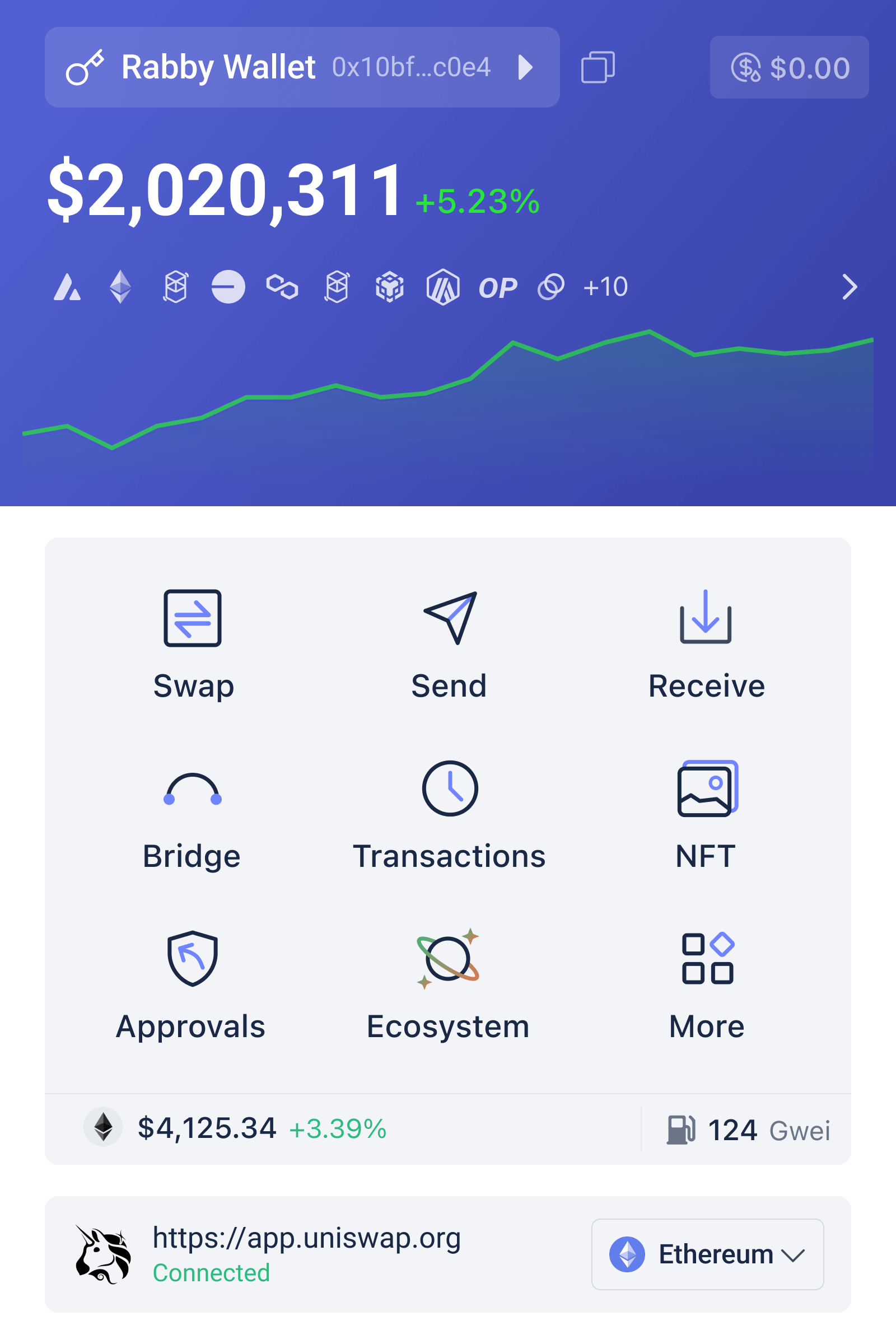
Before installing a browser extension, start with provenance. Use the project’s official distribution channels and check that the publisher, extension name, permissions, and update history are consistent with what you expect. Readers researching the rabby wallet download should treat the download step as part of the security process, not as an administrative detail. A genuine wallet can still be undermined by a fake website, a malicious extension, or a compromised device.
Recent Chrome Web Store information disclosed by Rabby Wallet concerns how the extension handles data collection and usage, with additional detail directed to the developer’s privacy policy. That disclosure is relevant to privacy expectations, but it should not be confused with a guarantee that every transaction is safe. Privacy transparency, software provenance, simulation quality, and user behavior are related controls, not interchangeable ones.
When a transaction preview appears, examine the economic intent in plain language. Does the wallet spend the token you selected? Is the recipient or contract expected? Are you granting an allowance, and if so, is it limited to the amount needed? Does the destination asset match the symbol and chain you intended? A familiar ticker is not enough: different contracts can use identical symbols, and bridged representations may carry different redemption and liquidity risks.
Also consider the transaction’s timing. Slippage is the permitted difference between an expected exchange rate and the final rate. A setting that is too tight may cause failure; one that is too broad may allow poor execution during volatility or low liquidity. Simulation can display an expected outcome, but the user still needs to judge whether the acceptable range makes economic sense. During a fast-moving US trading session, a quote can become stale quickly even when the interface looks unchanged.
Common myths, corrected
Myth: a successful simulation means the transaction cannot lose money
Reality: simulation primarily tests whether a call can execute and what state changes are expected. It does not predict market price, guarantee liquidity, or insure against a defective protocol. A swap can execute exactly as simulated and still be economically poor because the asset is thinly traded or difficult to sell afterward.
Myth: hardware signing makes every transaction safe
Reality: a hardware device protects the private key from many forms of malware, but it still signs the transaction the user approves. If the transaction is deceptive, the hardware wallet may faithfully authorize the wrong action. Key protection and transaction comprehension solve different problems.
Myth: cross-chain applications remove the need to understand networks
Reality: abstraction improves usability, but it can hide meaningful differences in fees, finality, token standards, bridge custody, and recovery procedures. The smoother the interface, the more important it becomes to inspect the underlying route when the amount is significant.
A reusable decision framework
For ordinary transactions, a simple three-part check is useful: identity, intent, and reversibility. Identity asks whether the extension, site, contract, and token are what they claim to be. Intent asks whether the simulated balance changes match the action the user wants. Reversibility asks what can be recovered if the route fails or the received asset loses liquidity.
This framework is deliberately conservative. If identity is uncertain, do not sign. If intent is unclear or the simulation shows unexplained approvals or transfers, stop and investigate. If reversibility is poor, reduce the amount, test with a small transaction, or choose a route with clearer recovery mechanics. A small test does not prove a protocol is safe, but it can reveal address, network, or operational mistakes before the full amount is exposed.
Users should also separate permissions from one-time actions. An approval may allow a contract to spend tokens later, depending on its allowance and implementation. Revoke unused permissions through a trusted method, but remember that revocation itself is another transaction requiring careful review. Security is not a single warning banner; it is a sequence of decisions that limits what any one mistake can cost.
What to watch next
The direction of travel is clear even if the endpoint is not: wallets are increasingly becoming interpretation layers between users and smart contracts. Better simulations could make complex DeFi actions more legible, especially when they explain cross-chain steps, approvals, fees, and failure paths instead of presenting only a green checkmark. The difficult question is how much confidence users should place in a preview generated from incomplete or changing state.
For now, the strongest practice is layered rather than absolute. Confirm the software source, understand the contract action, inspect simulated balance changes, limit approvals, question unusual routes, and account for what happens after the source transaction succeeds. Transaction simulation is powerful because it turns invisible code into a more readable forecast. It is safe only when the user remembers that a forecast has assumptions.
FAQ
What does transaction simulation show?
It estimates how a proposed transaction may affect balances, allowances, contract state, and execution success without broadcasting the transaction as finalized. The exact information varies by wallet, protocol, network, and the quality of the underlying simulation.
Can simulation prevent every cross-chain scam?
No. It may reveal unexpected transfers or suspicious approvals, but it cannot prove that a bridge, website, token, or destination contract is trustworthy. It also cannot guarantee that a delayed or non-atomic cross-chain process will complete as expected.
What should I do if the preview is confusing?
Do not sign merely because the transaction is urgent or the interface says it is routine. Check the network, contract address, token identity, approval amount, quoted output, fees, and recovery process. If the explanation remains unclear, cancel and investigate using independent, trusted project information.